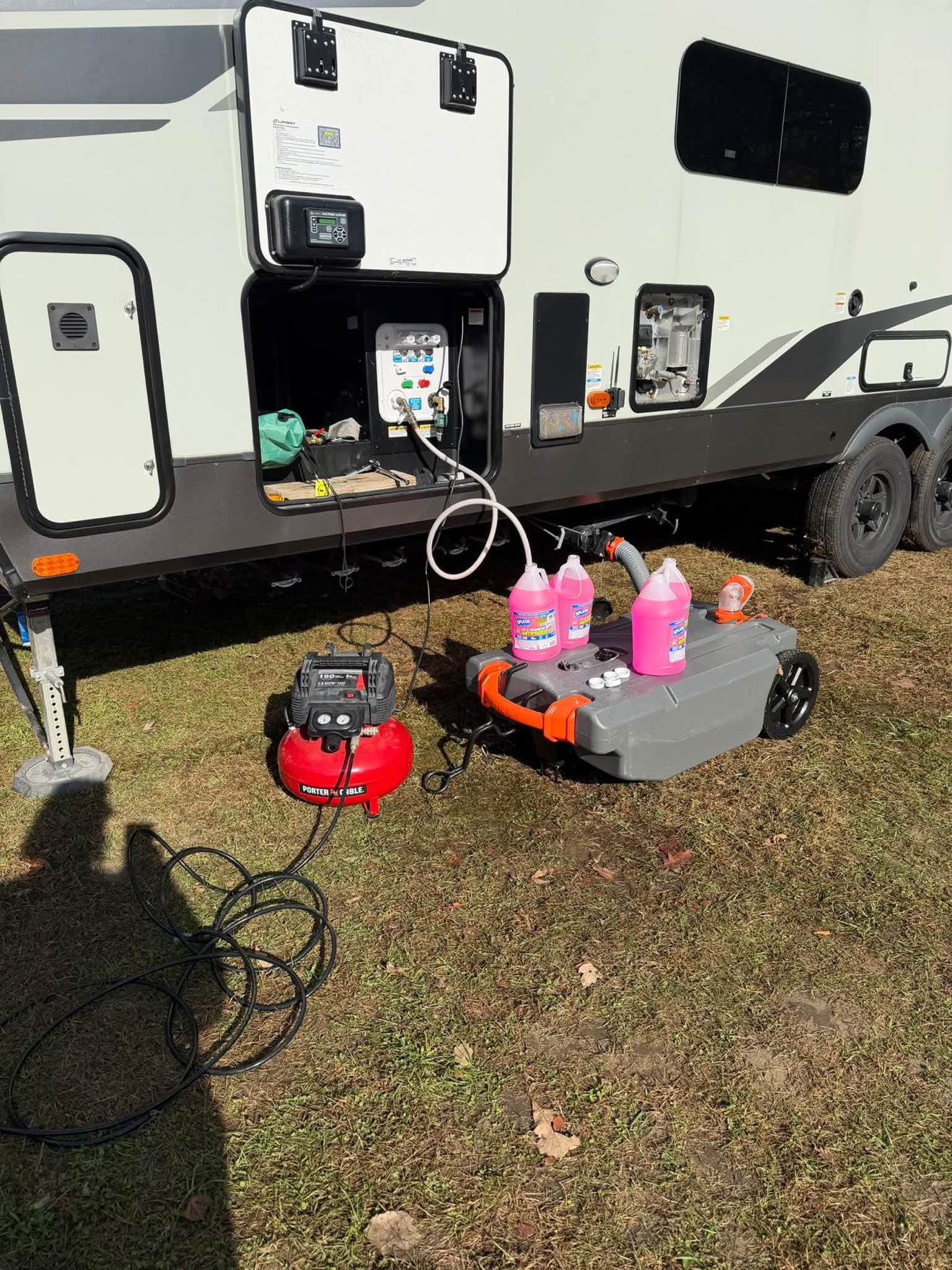
Winterizing your camper or RV is the most important thing to do during the winter. The way I personally winterize my camper is the same way many techs will winterize it. Here’s my step-by-step.
Start with your tanks empty — gray tanks, black tank, and fresh water tank. Then you can start on the water system.
First, make sure the hot water heater is off and the water coming into the camper is off and disconnected. Then open all the faucets and flush the toilet — that gets the pressure out of the water system. Next, open the lowest point drains for the hot water and cold water, and close the drains when you’re done. Then remove the anode rod — or the water tank drain, if you don’t have an anode rod — from the hot water tank.
Then I use a winterizing kit to blow out the water system. I set my air compressor‘s regulator to 40 psi. Be careful — too much air pressure can damage your water system, just like running too much water pressure can. On your Nautilus water system, set it to winterize — that bypasses the hot water tank. Once the system is pressurized, open the hot and cold at each faucet, the shower (don’t forget the outside one if you have more than one), and the toilet. Open and close all the valves on the Nautilus system to make sure there’s no water left in any of the valves or lines.
Next, pump the antifreeze through the water system. Don’t forget the washer, dishwasher, and icemaker on the refrigerator — everything that uses water needs pink antifreeze in it. When you’re running the toilet, faucets, or anything else, make sure pink is running out of it. Clear is water, pink is antifreeze.
But let’s talk about antifreeze a little. Antifreeze will and can still freeze. In fact, as antifreeze gets colder it turns into a thick, jelly-like state. Because of this it still expands, which could crack and blow your seals in faucets, valves, and some delicate smaller connectors and components.
Once the antifreeze is pumped everywhere — including into the lines that lead to the hot water tank (don’t fill your hot water tank with antifreeze, just turn the winterizing valve for a couple of seconds to get the antifreeze into the lines that lead to the tank) — the last step is to drain and blow the antifreeze out.
It seems redundant to blow out the antifreeze you just put in. But like I explained, antifreeze can and will still freeze, and then it expands. Blowing it out leaves remnants of antifreeze in the water system and makes sure no water is left in there. That gives the little bit of antifreeze the room it needs to expand while still protecting your water system.
Once that’s done, disconnect everything and put your anode rod or drain plug back into the hot water tank.
How do you winterize yours — blow-out, antifreeze, or both?
Quick note: some of the links in this post are Amazon affiliate links. As an Amazon Associate, I earn from qualifying purchases — it doesn’t cost you anything extra, and it helps keep the blog going.
If you like the camper life stuff, check out my Etsy shop, Outdooring — handmade stained glass crosses and light-up glass blocks: https://outdooring.etsy.com

Leave a Reply